Why Is Haiti So Poor? The History Donors Aren't Told

By HDNF Editorial Team
Editorial review: HDNF Communications Team
Published: September 9, 2026
Haiti was once the wealthiest colony in the Americas: the “Pearl of the Antilles” and France’s most prosperous colony. Today, it is the poorest country in the Western Hemisphere.
Why?
The answer is not a lack of Haitian ability. It is a history of extraction, foreign control, political instability, disasters, and development models that too often bypassed Haitian ownership.
According to the Council on Foreign Relations (CFR), nearly two-thirds of Haiti’s population lives below the poverty line. About 5.7 million people: almost half the population: face acute hunger, according to the World Food Programme.
This is Haiti’s crisis. But it is not Haiti’s identity.
Haiti’s Poverty Has a History
Is Haiti a developed country? No. By common economic and development measures, Haiti remains deeply underdeveloped. But the more important question is why.
In 1825, France recognized Haitian independence only after Haiti agreed to pay an indemnity to former colonists. The obligation is estimated at approximately $21 billion in today’s dollars. Over the following 122 years, as much as 80 percent of Haiti’s annual revenue went toward servicing this debt and related loans, according to the CFR’s review of historical research.
A new nation was forced to finance its freedom.
The United States recognized Haiti only in 1862. From 1915 to 1934, U.S. Marines occupied the country. During the occupation, the United States controlled Haiti’s security and finances, imposed racial segregation, forced labor, and press censorship, and removed presidents and legislatures that opposed its presence, as described in the U.S. Department of State’s historical account. Approximately 15,000 Haitians were killed in rebellions against the U.S. administration, according to the CFR backgrounder.
These facts do not erase Haiti’s internal political failures. They explain the conditions in which those failures developed.
HDNF does not demand reparations from France. We report, as a documented fact, on the UN Secretary-General’s call for reparatory justice frameworks. Our focus is the work ahead: building systems that Haitian communities own, operate, and strengthen over time.
A Record of Freedom, Not Dependence
Haiti’s history did not begin with poverty. It began with resistance.

1679: Port-de-Paix and Padrejean
Port-de-Paix is widely identified as the site of the first recorded organized Black slave revolt under French rule in Saint-Domingue. The maroon leader Padrejean’s earlier escape and resistance began around 1676, before the larger 1679 uprising. Historical accounts place this early revolt at the beginning of a long lineage of Haitian resistance. (Britannica; Bibliothèque nationale de France)
1779: The Chasseurs-Volontaires at Savannah
On October 9, 1779, approximately 545 free men of color from Saint-Domingue fought at the Siege of Savannah during the American Revolution. Their sacrifice is recognized in the City of Savannah’s historical account.
The tradition that a young Henri Christophe served as a drummer boy is widely repeated and appears in modern commemorative records, including a U.S. Congressional Record reference. Because the surviving evidence is indirect, we present the claim carefully.
1791: Bois Caïman
In August 1791, enslaved people in northern Saint-Domingue organized gatherings that helped mobilize the uprising that became the Haitian Revolution. Historians debate the precise date, location, and details of the Bois Caïman ceremony, but significant clandestine organizing and ritual activity occurred before the revolt. (Cambridge University Press)
1804: Independence
Toussaint Louverture and Jean-Jacques Dessalines, both formerly enslaved, led the rebellion that culminated in Haiti’s independence in 1804. Haiti became the first postcolonial Black republic: a beacon of abolition, self-determination, and racial equality, as the CFR describes it.
Should a people at the avant-garde of freedom and territorial independence need to learn freedom and independence from others?
Haitians have always possessed capacity. The challenge has been creating conditions in which that capacity can produce lasting prosperity.
The Crisis Is Urgent: and Structural
Haiti’s present circumstances are severe.
- Between 2010 and 2020, the United Nations allocated more than $13 billion in international aid for Haiti, primarily for disaster relief and development programs, according to the CFR backgrounder.
- Remittances from Haitians abroad reached approximately $4.11 billion in 2024, equal to about 15.5 percent of GDP, according to the World Bank.
- Haiti’s trade deficit exceeded 15 percent of GDP in 2024, while more than 82 percent of Haitian exports went to the United States in 2023. (World Bank; Observatory of Economic Complexity)
- Public debt was forecast near 12 percent of GDP in 2025, according to the International Monetary Fund.
The 2010 earthquake killed roughly 220,000 people, displaced approximately 1.5 million, and created reconstruction costs near $8 billion: more than Haiti’s annual GDP. Cholera was introduced by UN peacekeepers after the earthquake. In 2021, President Jovenel Moïse was assassinated, and a magnitude 7.2 earthquake struck the southern peninsula, killing more than 2,000 people. Tropical Storm Grace followed days later.
Gang violence has deepened the emergency. The UN has described gangs as having “near-total control” of Port-au-Prince and major trade routes. More than 5,600 people were killed in gang violence in 2024, according to the UN Office of the High Commissioner for Human Rights. By October 2025, a record 1.4 million people had been forcibly displaced, according to the International Organization for Migration.
Immediate relief is necessary. But immediate relief is not the same as development.
More Money Through the Same Pipes Is Not Enough
Foreign security missions have followed one another. The UN authorized the Kenya-led Multinational Security Support mission in 2023. After funding, equipment, and personnel shortages, the Security Council authorized a new hybrid Gang Suppression Force in September 2025.
Security matters. Food matters. Institutions matter.
But Haiti cannot build self-reliance through an endless cycle of emergency response, external control, and temporary projects. The delivery model must change.
Tourism illustrates the cost of instability. Haiti welcomed 1.3 million tourists in 2018 and generated approximately $620 million in tourism revenue. By 2021, arrivals had fallen to 148,000 travelers and about $80 million, while the Dominican Republic welcomed five million tourists that same year, according to the CFR.
Haiti needs help for Haiti that strengthens local ownership: not assistance that leaves communities waiting for the next shipment, mission, or grant.
Haiti 2050 Builds What Lasts
HDNF’s Haiti 2050 vision is a 25-year commitment to move Haiti from emergency relief toward a self-sustaining society.
Our model connects five pillars:
- Food Production : supporting fruits, vegetables, livestock, and community food systems adapted to Haiti’s land and climate.
- Energy Independence : developing biodigesters, improved wood stoves, and waste-to-energy systems that place power in local hands.
- Preservation Skills : teaching canning, fermenting, and dehydrating so harvests last beyond one season.
- Craftsmanship : strengthening woodworking, sewing, tool repair, and other skills that create durable local livelihoods.
- Sustainable Tourism : protecting Haitian culture and natural resources while generating income for communities.
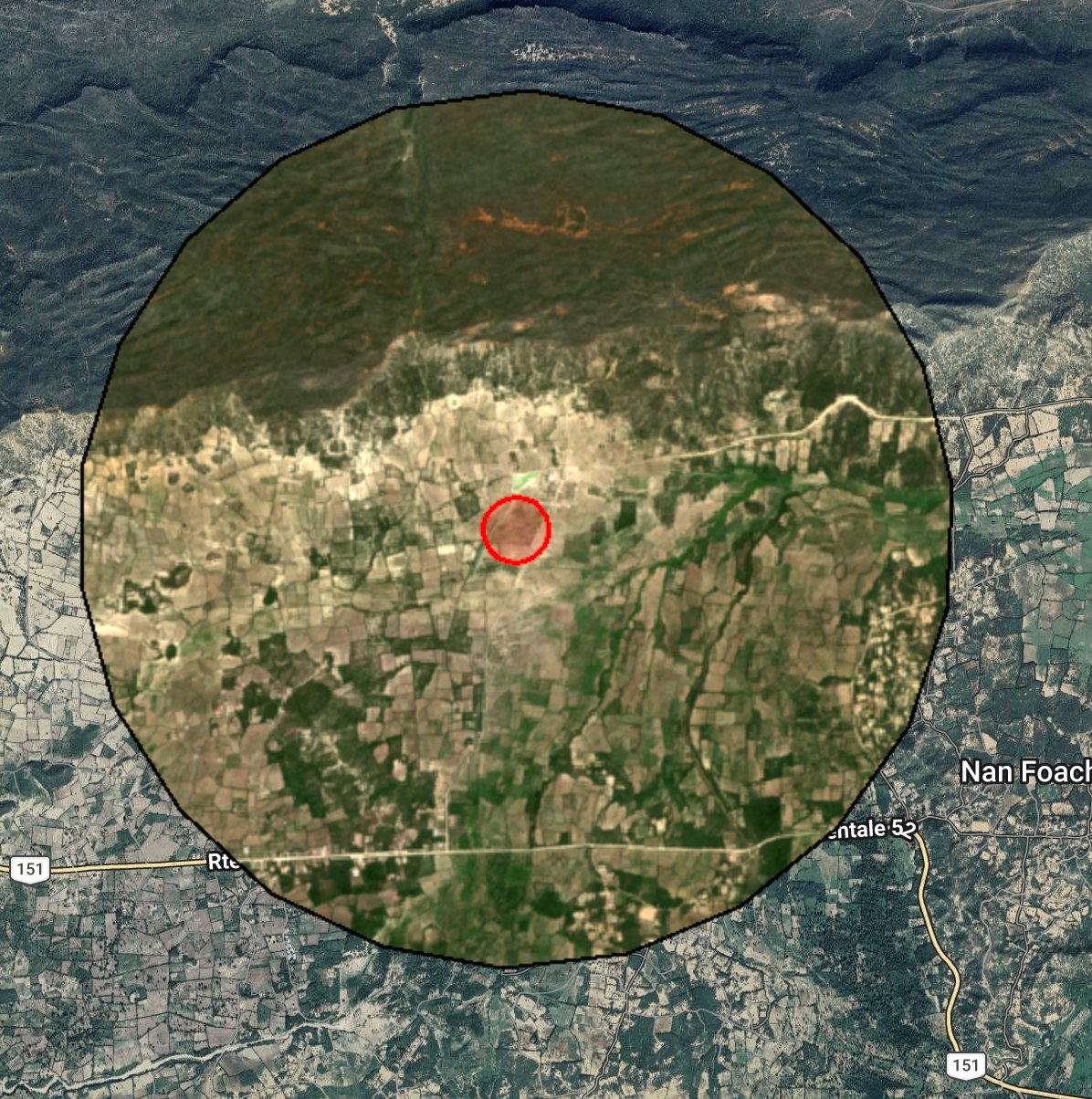
The Precision Agriculture Initiative, launched May 1, 2026, applies satellite imagery, terrain mapping, soil analysis, local farmer knowledge, and expert agricultural advice to specific plots of land.
The goal is simple: diagnose first, then prescribe.
Research by Bargout and Raizada (2013), Soil nutrient management in Haiti, pre-Columbus to the present day, documents the long history of soil nutrient challenges and the importance of sustainable, locally appropriate agricultural management. HDNF applies that principle through data-informed recommendations designed for each farmer’s actual land.
A general solution is not enough. A farmer needs a plan for this soil, this terrain, and this growing season.
That is the difference between distributing inputs and building capability.
Your Support Can Build the Next Generation
A donor contribution should enter an organized process: trusted local partnerships, technical expertise, practical tools, and measurable progress.
Your support can help HDNF:
- Expand community food production.
- Strengthen irrigation and soil-management efforts.
- Equip farmers with plot-specific agricultural information.
- Support local savings, lending, and enterprise development.
- Develop energy systems that reduce outside dependence.
- Preserve harvests and reduce food waste.
- Create livelihoods through craftsmanship and sustainable tourism.
We work with Haitian leaders, not over them. We support communities as builders, owners, and decision-makers.
Temporary relief is immediate. Haiti 2050 is lasting.
Support HDNF’s Haiti 2050 vision, learn about our approach, or explore our food security programs and economic development work.
There is hope because the work is already underway.
Sources and Methodology
This article synthesizes the Council on Foreign Relations backgrounder, “Haiti’s Troubled Path to Development,” by Diana Roy and Rocio Cara Labrador, and the primary or specialist sources cited below. Figures are presented as reported by those sources and may change as agencies update their data.
- World Food Programme: Haiti
- World Bank: Personal remittances received, Haiti
- World Bank: Haiti trade balance
- International Monetary Fund: Haiti government debt data
- International Organization for Migration: Haiti displacement
- UN Office of the High Commissioner for Human Rights: Haiti violence figures
- New York Times: Haiti’s independence debt timeline
- U.S. Department of State: The United States Occupation of Haiti, 1915–1934
- Bargout & Raizada (2013), Soil nutrient management in Haiti
- Cambridge University Press: “Voices of Liberty: The Haitian Revolution Begins”
Disclaimers and Comment Policy
This article is provided for general educational and informational purposes. It is not legal, tax, investment, or financial advice. Donors should consult qualified professionals regarding their individual circumstances.
HDNF does not endorse or oppose any candidate or political party. This article is nonpartisan and focuses on documented history, structural conditions, and community-centered development.
If reader comments are enabled on this topic, HDNF will remove hate speech, defamation, partisan attacks, threats, harassment, and spam. Respectful disagreement and evidence-based discussion are welcome.