One Thing on Our Minds: Economic Inclusion for Every Haitian

The Haitian Development Network Foundation (HDNF) is a US-registered 501(c)(3) nonprofit with one thing on our minds: economic inclusion for every Haitian : so nobody's just surviving, everyone's thriving, on their own terms.
That is our mission in one sentence. It is also our standard.
When you hear “economic inclusion,” you might think about jobs, income, or access to financial services. Those things matter. But economic inclusion means more than earning enough to get through the week.
It means having the tools, skills, opportunities, and confidence to shape your own future.
It means being productive, fulfilled, and fully empowered to make choices about your life. It means moving beyond basic subsistence toward real participation in the economy and in the decisions that affect your family and community.
Survival is immediate. Inclusion is lasting.
Economic Inclusion Means More Than Getting By
Haiti faces an urgent crisis. Nearly half of the country’s population: approximately 5.4 million people: has faced acute food insecurity in recent years. Inflation has reduced household purchasing power. Limited electricity, difficult roads, scarce credit, and unstable markets make it harder for families to turn hard work into lasting progress.
These conditions are serious. We will not soften them.
But Haitian communities are not defined by these challenges. They are filled with farmers, entrepreneurs, craftspeople, parents, teachers, local leaders, and young people who are already building, creating, and leading.
The question is not whether Haitian people have ability.
The question is whether they have reliable systems that allow their ability to produce results.
That is where HDNF focuses its work.
Emergency relief has an important role when people face immediate danger. Food distributions, cash assistance, and health services can save lives during a crisis. But relief alone cannot create a self-sustaining society.
We need both immediate response and long-term commitment.
Relief protects today. Development builds tomorrow.
Our goal is to help Haiti transition from emergency relief to a self-sustaining society through the Haiti 2050 vision. That requires more than one project or one grant. It requires food, energy, skills, livelihoods, and local economic resilience working together.
Five Pillars. One Purpose.
Our five interconnected pillars are designed to create the conditions for economic inclusion.
1. Food Production Creates Stability
A family cannot plan for the future when every meal is uncertain.
Through our food security programs, we support community gardens, irrigation, soil health, orchards, seed libraries, livestock systems, and practical agricultural training. One community garden project currently enables 80 households to grow food continuously through newly constructed irrigation canals.
That is more than food for today.
It is productive land, practical knowledge, improved nutrition, and a stronger household economy. When families grow more of what they eat, they can reduce expenses, protect themselves against price shocks, and potentially sell surplus production.
Food security is the foundation. Economic inclusion is the next step.
2. Energy Independence Keeps Value in the Community
Unreliable and expensive energy limits nearly every other opportunity. It affects cooking, farming, small businesses, food preservation, education, and local commerce.
HDNF supports biodigesters, improved wood stoves, and waste-to-energy systems that help communities reduce dependence on external fuel sources. These systems turn local resources into useful energy while reducing pressure on Haiti’s forests.
The benefit is practical: lower fuel costs, cleaner cooking, more reliable energy, and greater local control.
Energy independence means money stays closer to home.
3. Preservation Skills Extend Every Harvest
A successful harvest should not disappear before the next one arrives.
Canning, fermenting, and dehydrating help households preserve food, reduce waste, and make the value of each harvest last longer. These are accessible skills with lasting economic value.
Preservation also creates possibilities for small businesses. A household or cooperative can transform seasonal produce into products that can be stored, shared, or sold.
The goal is not simply to produce more.
The goal is to retain more value.
4. Craftsmanship Builds Livelihoods
Economic inclusion must include people whose talents do not fit neatly into traditional employment.
Through woodworking, sewing, and tool repair, communities can create durable goods, develop practical skills, and reduce dependence on imported products. These trades create paths to income while strengthening local capacity.
A repaired tool can keep a farmer working. A locally made piece of furniture can replace an imported product. Sewing skills can become a household business. Woodworking can support construction, commerce, and training for the next generation.
Tools matter. Training matters. Ownership matters most.
5. Sustainable Tourism Protects Culture and Creates Opportunity
Haiti’s cultural heritage, landscapes, history, and communities hold tremendous value. Sustainable tourism can help transform that value into locally controlled income without turning culture into a commodity or placing communities under outside control.
HDNF supports community-centered tourism based on UNWTO principles. The focus is clear: protect Haitian culture, respect local communities, preserve natural resources, and ensure that economic benefits reach the people who live in the places visitors come to experience.
Tourism should not extract value from a community.
It should help a community build value for itself.

Precision Agriculture Replaces Guesswork With Better Decisions
Our flagship initiative, the Precision Agriculture Initiative, brings our mission into sharper focus.
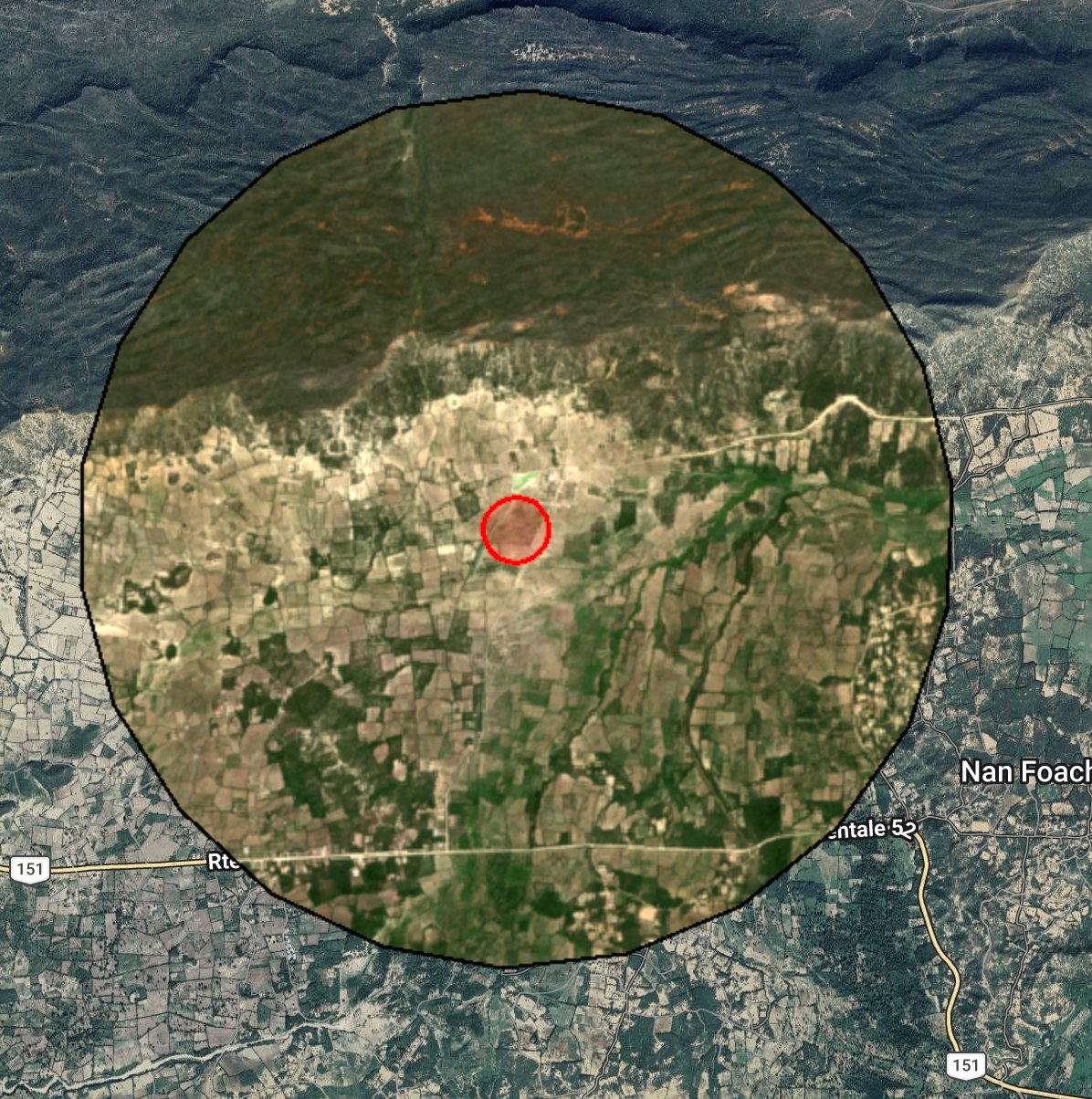
Launched on May 1, 2026, the initiative combines local farmer knowledge with satellite imagery, soil analysis, terrain mapping, and expert agricultural advice. The purpose is straightforward: identify the specific needs of each plot of land and determine which crops are best suited to it.
A farmer should not have to apply the same strategy to every field.
Some areas hold moisture. Others are dry. Some plots are fertile. Others need soil restoration. Some slopes are vulnerable to runoff and erosion. A science-based approach helps farmers make better decisions about what to plant, where to plant it, how much input to use, and how to monitor results.
An early screening report for a proposed pilot area examined approximately 20 acres within a broader 3,600-acre landscape using Sentinel-2 imagery, vegetation data, and terrain analysis. The screening showed meaningful variation in vegetation condition and slope across the area.
This is what economic inclusion looks like in practice:
- Better information before a farmer invests scarce resources.
- Soil samples targeted to the areas where they can provide the most value.
- Seeds, compost, and fertilizer applied where they are most likely to improve results.
- Season-by-season monitoring instead of relying only on memory or guesswork.
- Technical knowledge translated into decisions a farmer can use in the field.
Technology is not the point.
Better choices are the point.
Haiti’s History Shows What Collective Action Can Build
Haiti’s history gives us a powerful example of people claiming agency over their own future.
On the night traditionally associated with the Bois Caïman ceremony in August 1791, enslaved Haitians gathered in secret in the northern plain of Saint-Domingue. Led in the traditional account by Dutty Boukman and Cécile Fatiman, they formed a collective commitment to resist slavery.
The Haitian Revolution did not happen because someone else arrived to create freedom for them. It happened because enslaved people organized, resisted, and acted together. In 1804, Haiti became the first nation founded by formerly enslaved people.
You can read more about this history in our article, “Bois Caïman, 1791: The Ceremony Behind the Haitian Revolution”.
That legacy still matters.
Economic inclusion is also about agency. It is about people having the resources and freedom to make decisions, build livelihoods, protect their communities, and pursue a future on their own terms.
The work is different today. The principle is familiar.
Freedom must be lived through opportunity.
Your Support Builds Systems That Last
When you support HDNF, you are not funding a vague promise. You are helping place practical resources into an organized, community-centered process.
Your gift can support:
- Food production systems that help households grow nutritious food.
- Irrigation and soil-health work that strengthen productive land.
- Precision agriculture reports that guide crop and input decisions.
- Energy systems that reduce fuel dependence.
- Preservation training that extends the value of each harvest.
- Craftsmanship programs that create skills and local income.
- Sustainable tourism initiatives that protect culture and resources.
- Community-led economic development and local entrepreneurship.
Our approach is not to work over communities. It is to work with them: alongside Haitian leaders, farmers, entrepreneurs, and families who understand their local realities best.
As one community partner put it:
“With their support, local businesses will grow faster.”
That is the promise of partnership: trusted local leadership strengthened by practical resources, technical expertise, and long-term commitment.
One Mission. A Generational Horizon.
Economic inclusion for every Haitian will not be achieved in one campaign or one news cycle. It will be built through repeated decisions: to teach instead of merely distribute, to strengthen instead of replace, to invest instead of withdraw, and to plan for generations instead of responding only to the next emergency.
This is the difference between temporary relief and transformational development.
Today, you can help build the systems that make tomorrow more secure.
Donate to HDNF to support food security, precision agriculture, local livelihoods, energy independence, and community resilience.
You can also request a precision agriculture report for a farm in Haiti or explore HDNF’s approach to long-term development.
Support the work. Share the mission. Join Haiti’s future.
Because nobody should be limited to surviving.
Everyone deserves the opportunity to thrive: productively, fully, and on their own terms.