Byline: HDNF Editorial Team
Editorial review: HDNF Communications Team
Relief responds to a crisis. Transformation ends the crisis.
That is the difference between helping Haiti survive another year and helping Haiti build a future that lasts for generations. Emergency aid saves lives, and it remains necessary when families face hunger, displacement, violence, or disaster. But emergency response alone cannot create food systems, reliable energy, skilled livelihoods, or economic equity.
Survival is immediate. Independence is lasting.
The Haitian Development Network Foundation (HDNF) is inviting donors to support a different horizon: the Haiti 2050 vision. Our goal is clear: a self-sustaining Haitian society in which every person has the opportunity to participate in the economy, build a livelihood, and thrive on their own terms.
Haiti Needs More Than the Next Relief Cycle
Haiti’s challenges are serious. Food insecurity, energy dependence, soil degradation, poverty, displacement, and limited economic opportunity affect households and communities every day.
Yet the problem is not a lack of Haitian capacity.
Haitians have been freedom fighters and independent-minded people from the beginning of the nation’s history. Around 1679, historians associate Port-de-Paix with an early uprising, part of a longer tradition of resistance and marronage; the surviving documentation is limited, and sources describe those involved differently, so this date should be presented carefully. In 1791, the Bois Caïman tradition is associated with the organized resistance that helped launch the Haitian Revolution. In 1804, Haiti declared independence after defeating colonial rule and slavery.
This is a history of initiative, courage, and self-liberation.
The continuing economic crisis must be understood in the context of extractive systems, environmental damage, exclusion, and unequal access to capital: not as evidence that Haitians lack ability or need foreign instruction. Haiti does not need outsiders to take control. Haiti needs trusted partners willing to support Haitian leadership, local ownership, and durable systems.
Not rescue, but partnership.
Not dependence, but capacity.
Not another temporary project, but a generational commitment.
What Economic Inclusion Means in Practice
Economic inclusion means more than receiving assistance. It means having a fair opportunity to access land knowledge, tools, energy, training, markets, financing, and income-producing work.
For a Haitian farmer, economic inclusion may mean receiving a soil-informed crop plan instead of generic advice. For a craftsperson, it may mean access to tools, repair skills, and a market for locally made goods. For a rural household, it may mean reliable energy, food preservation techniques, and a community savings group that can provide capital when a formal bank cannot.
The goal is not simply to distribute more resources.
The goal is to expand the ability of people and communities to create, manage, and retain value.
Haiti 2050 Connects Five Interconnected Sectors
HDNF’s Haiti 2050 framework, which guides our work including the Precision Agriculture Initiative launched May 1, 2026, organizes this work around five interconnected sectors:
1. Food Production
We support fruits and vegetables, sustainable livestock systems, community gardens, irrigation, soil health, and locally appropriate farming methods.
Our flagship Precision Agriculture Initiative, launched on May 1, 2026, combines local farmer knowledge with satellite imagery, soil analysis, terrain mapping, and expert agricultural advice. The purpose is practical: identify what each plot of land needs and determine which crops are best suited to it.
This replaces guesswork with evidence.
Research by Bargout and Raizada documents the long history of soil nutrient challenges in Haiti, including erosion, nutrient depletion, and the consequences of land-use systems that have weakened agricultural productivity. Their review also examines earlier Haitian and pre-Columbian approaches to soil management. Sustainable agriculture in Haiti must begin with understanding the land: not assuming every field requires the same answer.
2. Energy Independence
Biodigesters, improved wood stoves, and waste-to-energy systems can reduce dependence on external fuel sources while placing energy production closer to the communities that use it.
Energy is not separate from food security or economic development. When households spend less time and money securing fuel, they have more capacity to cook, farm, preserve food, operate businesses, and plan for the future.
3. Preservation Skills
Canning, fermenting, and dehydrating help households extend the value of each harvest.
A harvest that cannot be stored is a short-term gain. A harvest that can feed a household months later becomes part of a stronger local food system. Preservation also reduces waste and creates opportunities for small-scale food enterprises.
4. Craftsmanship
Woodworking, sewing, and tool repair build practical skills and local income.
Our principle is simple: Made in Haiti. Made to Last. Supporting local craftsmanship reduces dependence on imported goods, strengthens household income, and recognizes the skill already present in Haitian communities.
5. Sustainable Tourism
Community-centered tourism can generate local income while protecting Haitian culture, communities, and natural resources.
HDNF’s approach follows responsible tourism principles, including the community-centered values reflected in UN Tourism frameworks (the UN agency renamed from the UN World Tourism Organization in January 2024). Tourism should not extract value from a community and leave little behind. It should create trusted local partnerships, protect heritage, and expand opportunity.
This Is a 25-Year Commitment, Not a One-Year Campaign
Short-term grants often produce short-term activity. A delivery is made. A workshop is held. A project closes. Then the community is left waiting for the next intervention.
Haiti 2050 is built around continuity.
We are working toward programs that are:
- Locally owned and operated
- Designed for replication and expansion
- Guided by research and technical expertise
- Connected across food, energy, skills, livelihoods, and markets
- Measured through practical milestones
- Built to continue beyond one grant or organization
This is why donor support must be flexible, patient, and focused on systems. A farmer may need immediate support this season, but the larger objective is a farm that becomes more productive, knowledgeable, and resilient over many seasons.
A stove may reduce fuel use today. Local technicians who can install and maintain energy systems create capacity for tomorrow.
A business loan may support one entrepreneur. A trusted savings-and-lending network can give an entire community a durable financial foundation.
What Your Gift Can Support
Your contribution should enter an organized process: not disappear into a vague promise.
Depending on the program and designation, donor support can help fund:
- Precision agriculture assessments and targeted soil sampling
- Farmer training and locally appropriate production systems
- Community gardens, irrigation, and food-production infrastructure
- Biodigesters, improved stoves, and waste-to-energy solutions
- Food preservation training and equipment
- Woodworking, sewing, and tool-repair skills
- Community savings and lending initiatives
- Sustainable tourism planning and local enterprise development
- Monitoring, reporting, and technical support
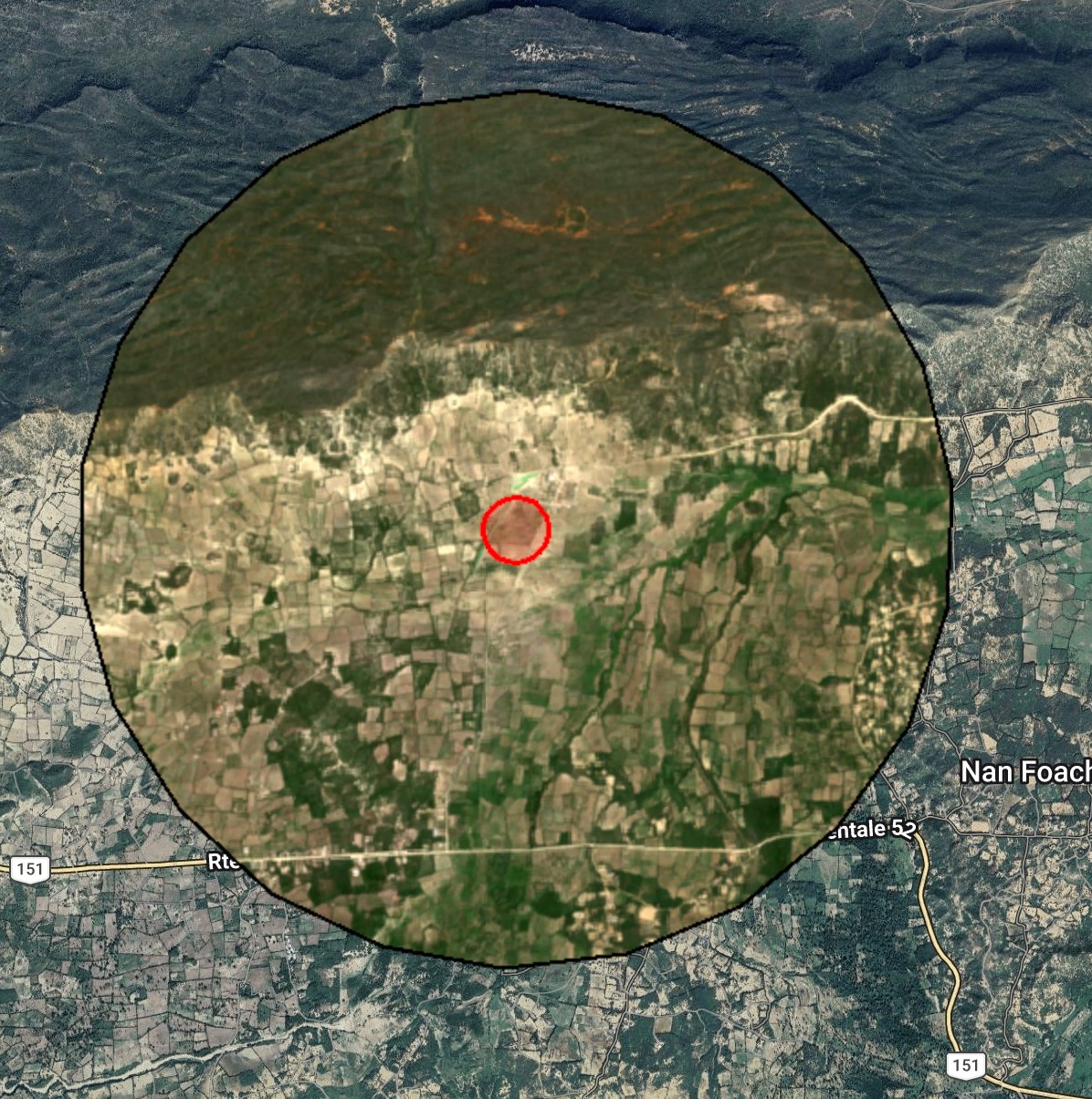
HDNF’s precision agriculture screening work demonstrates how donor-supported technical capacity can produce measurable decision tools. A preliminary assessment used Sentinel-2 imagery, vegetation analysis, and terrain screening across an approximate 20-acre pilot area and a larger surrounding context. The assessment identified variation in vegetation condition and slope, helping guide future field validation and soil sampling.
These are screening indicators, not final impact results. That distinction matters.
We will label funding and outcomes clearly as enacted, requested, pledged, proposed, preliminary, or reported. Donors deserve to know what has been funded, what is planned, what has been measured, and what remains under development.

Your Gift Supports Haiti's Future
When you give to emergency relief, you help meet an urgent need. When you support long-term development, you help build the conditions that make fewer emergencies inevitable.
You help a farming family make better decisions about its land.
You help a household preserve food beyond the harvest.
You help a local technician maintain an energy system.
You help a craftsperson earn from skills that already belong to the community.
You help a Haitian entrepreneur access capital and strengthen a local market.
Your gift is not a bandage. It is support for the first independent Black republic completing its own liberation.
Donate to support Haiti 2050.
Subscribe for progress updates.
Join HDNF as a long-term donor and trusted partner.
By 2050, Haiti Should Not Need Relief to Survive
The goal is not to pretend that Haiti’s crises are over. The goal is to build systems strong enough to address them at their roots.
By 2050, Haiti should produce more of its own food, generate more of its own energy, preserve more of its harvest, create more of its own goods, and retain more of the value created by its people and communities.
That future will not be built by one organization. It will be built through research, community, and commitment.
Emergency relief is immediate.
Haiti 2050 is lasting.
Donate to HDNF · Learn about our approach · Explore Precision Agriculture · Support food security · Support economic development
Sources and Methodology
Published: September 18, 2026
Last updated: October 4, 2026
Author: HDNF Editorial Team
Editorial review: HDNF Communications Team
This donor-education article draws on:
- HDNF Our Approach, including the organization’s long-term development philosophy and Haiti 2050 direction.
- HDNF Precision Agriculture for Haitian Farmers, including preliminary satellite, NDVI, terrain, and pilot-screening information.
- HDNF Food Security Programs.
- HDNF Economic Development Program.
- Bargout, Remy N., and Manish N. Raizada. “Soil nutrient management in Haiti, pre-Columbus to the present day: lessons for future agricultural interventions.” Agriculture & Food Security, 2013, 2:11. https://doi.org/10.1186/2048-7010-2-11
- U.S. Department of State, Office of the Historian: The Haitian Revolution
- The Haitian Declaration of Independence, January 1, 1804
- Library of Congress: Freedom in the Black Diaspora: Ayiti
- On the 1679 Port-de-Paix uprising: no single primary account survives. The event is documented through later historical accounts and reference works, and sources also diverge on who was involved — Britannica records “the first black slave revolt” while the OpenEdition chapter, quoting Charlevoix, records “the revolt of a free person of colour” — so the article presents the event and its date cautiously without characterising the participants. For the broader historiography of early resistance and marronage, see Geggus, David Patrick. Haitian Revolutionary Studies. Bloomington: Indiana University Press, 2002. Cited without a URL; the previous Project MUSE chapter link no longer resolves and has been removed.
- Scholarly discussion of early accounts of Bois Caïman
Historical claims are presented according to the available primary and secondary research. The 1679 event is described as an early uprising documented through later historical accounts, and its participants are described differently across sources. The Bois Caïman tradition is presented with appropriate recognition that its precise details are debated in the historical record. Haiti’s independence is anchored in the January 1, 1804 declaration.
HDNF does not demand reparations from France. HDNF may report on the United Nations Secretary-General’s call for reparatory justice frameworks as a documented matter, but this article is focused on locally owned development, economic inclusion, and Haiti’s long-term self-reliance.
This article is provided for general educational and informational purposes and does not constitute financial, tax, or legal advice.
HDNF is nonpartisan and does not endorse or oppose any candidate, political party, or administration.
If comments are enabled, moderators will remove hate speech, defamation, partisan attacks, spam, and unsupported allegations about identifiable individuals or organizations. Respectful, evidence-based discussion is welcome.